web widgets

01 September, 2013

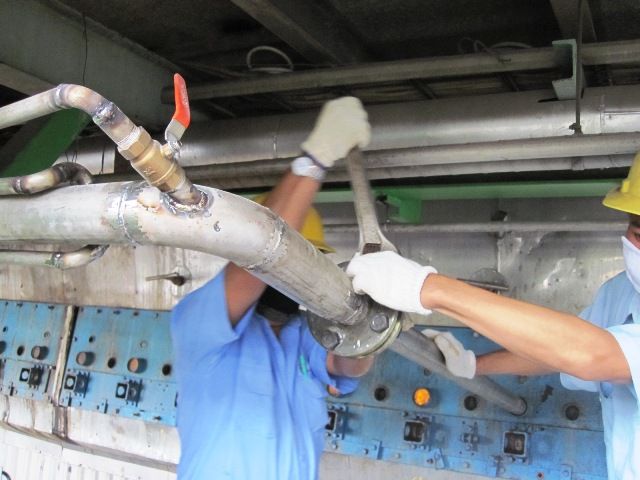
SALT CAKE CHARGING SILO TANK SYSTEM DIRECTLY TO PRIMARY AIR PORT

Figure.Primary Air Port

Figure.Na2SO4 (Salt Cake)
Create a new innovation is a priceless achievement.
The company has a large plant requires a lot of creative people to improve the performance of a plant.Dan companies will benefit more as well as with employees who there.They-those involved in the project got the reward they deserve.

20 May, 2013

RECOVERY BOILER


Figure 3.1 The position of recovery boilers in pulp mills

After a while the vacuum in to write about the recovery boiler because of the many activities, this time the author presents articles about the recovery boiler and the supporters.this time the author will present an article about the recovery boiler.

17 May, 2013

WHAT IS THE ELECTROSTATIC PRECIPITATOR

This article will discuss the application of electrostatic theories that have been discussed in previous articles here. Application of electrostatic in the industrial world are used to address the problem of waste dust. Among other industries that apply the power plant, sugar mills and cement plants, one way is to use electrostatic precipitator (ESP).

10 May, 2013

VACUUM EVAPORATOR


3.1 Definition of Vacuum Evaporator
Vacuum Evaporator unit is a process aimed at concentrating the waste in the leaching pulp Pulp Making (Black Liquor) by evaporation of water from the Black Liquor using steam. Black Liquor with a high content of total solid fuel will be used in the Recovery Boiler.

08 May, 2013

BURNER MANAGEMENT SYSTEM (BMS)

Technical data
  • Capacity oil 500 kg/h
  • Oil pressure ~ 6 bar
  • Combustion air pressure ~ 1200 pa
  • Atomizing steam pressure ~ 10 bar
  • Capacity, ignitor 125 kw
  • Gas pressure ignitor inlet ~ 0.1 bar
  • Air pressure ignitor inlet 1.0 kpa
Burner assembly

1. View for right side


23 April, 2013

THE STEAM TURBINE

There are three (3) important things that should be known by an operator to operate the power plant or the Power House.
                   1. SAFETY:
                 a. Security for the people (person). In this case to avoid the things that   can cause an accident.
                  b. Security for equipment (equipment) prevent damage to the equipment with respect to the implementation of the operation as recommended by manufacturer (Manual Book) as well as good maintenance.

 
Design by Afridal Walda | Directed by Afridal Walda - Walda's Blog | Blog that provides information about the Recovery Boiler and supporting parts